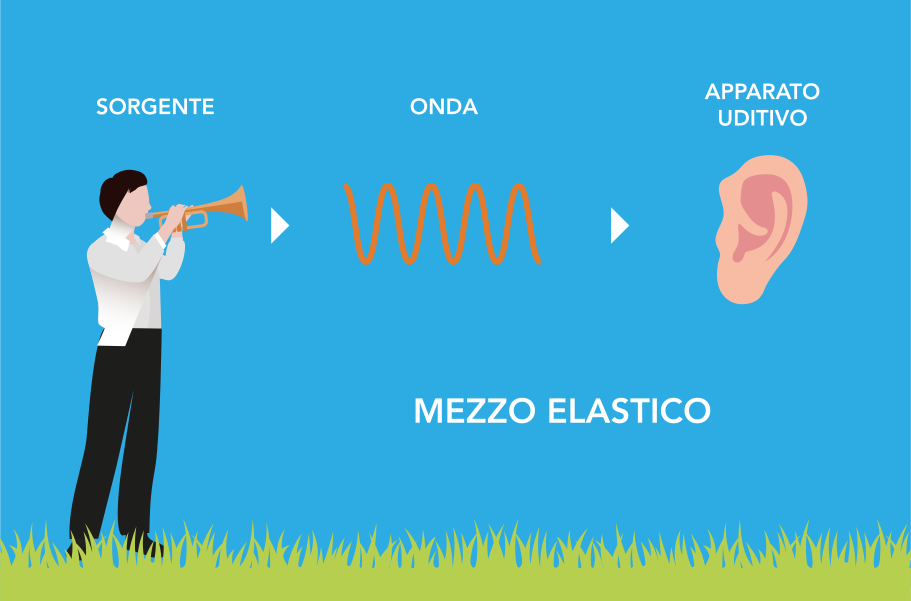
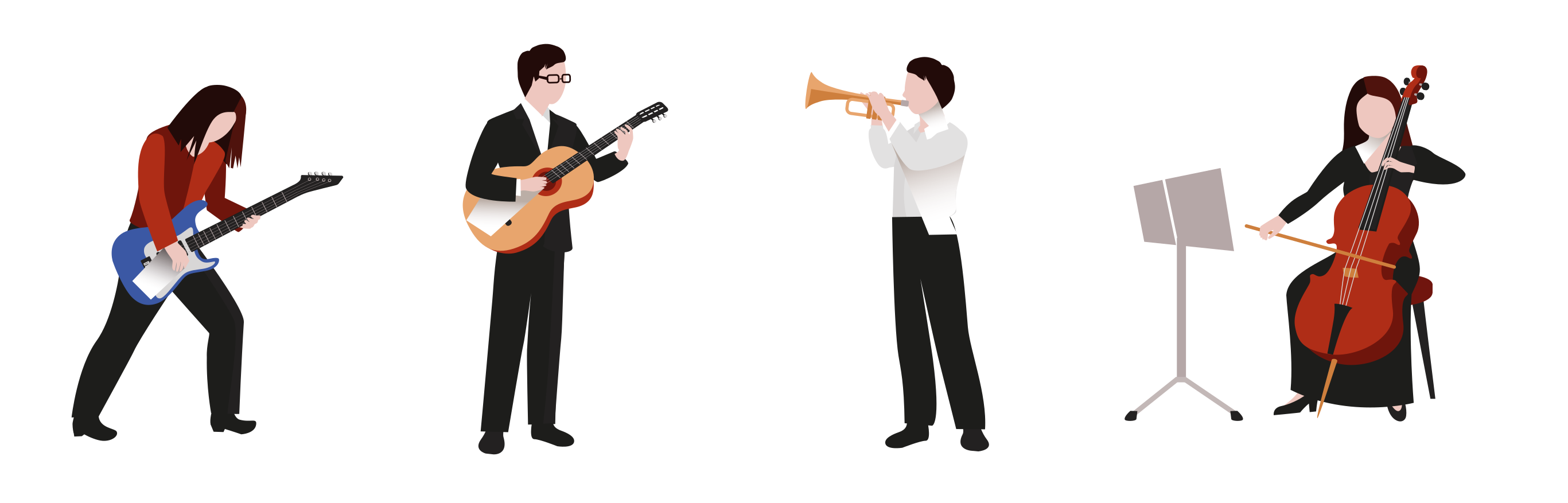
Il Timbro è la qualità del suono che distingue due suoni con stessa frequenza e ampiezza.Timbre is the quality of sound that distinguishes two sounds with the same frequency and amplitude.
È ciò che distingue un flauto da una chitarra, anche quando suonano la stessa nota.It's what makes a flute sound different from a guitar, even when they play the same note.
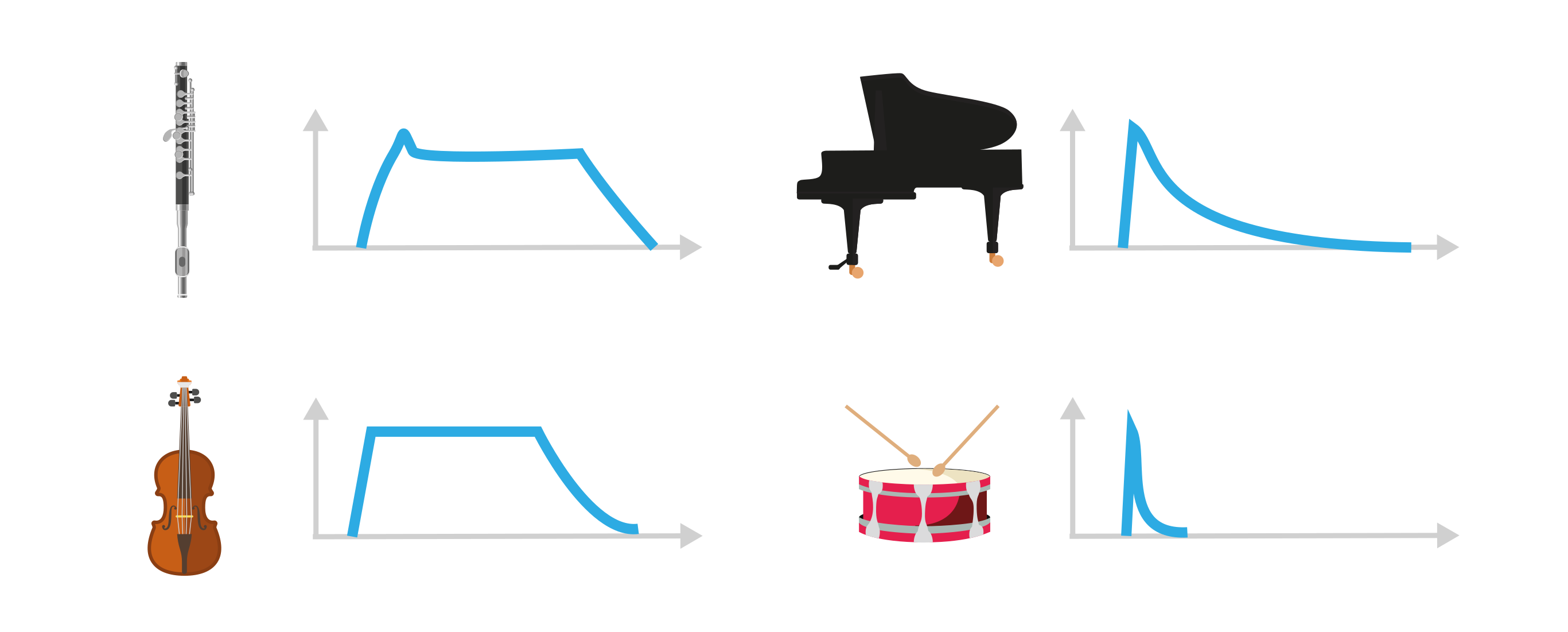
Il timbro dipende da due aspetti del suonoTimbre depends on two aspects of the sound
Profilo DinamicoDynamic Profile
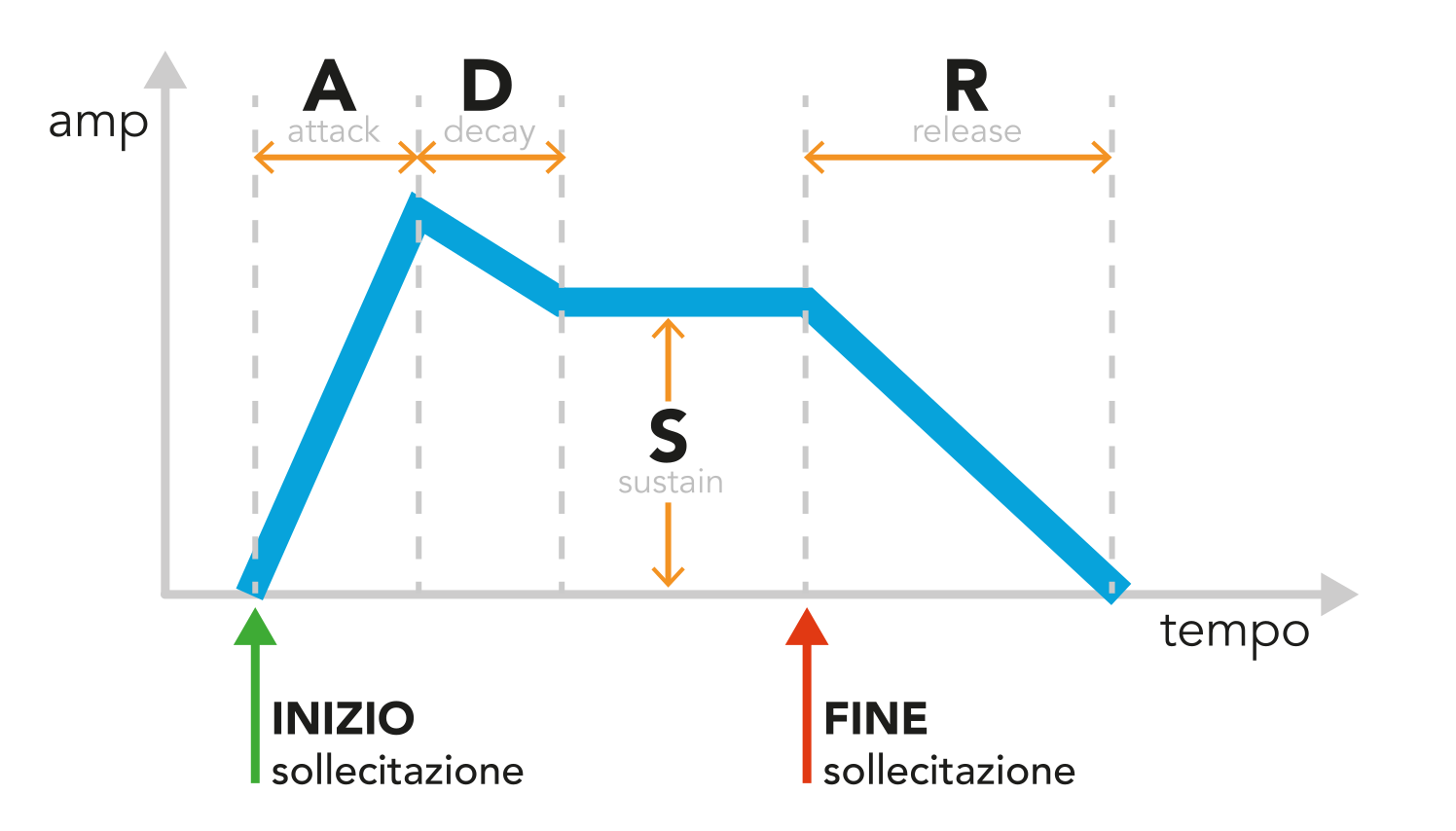
Come l'ampiezza del suono cambia nel tempo: attacco, decadimento, sostegno, rilascio.How the amplitude of the sound changes over time: attack, decay, sustain, release.
SpettroSpectrum
Quali frequenze (parziali) compongono il suono e con quale ampiezza relativa.Which frequencies (partials) make up the sound and with what relative amplitude.
Il Profilo Dinamico (Inviluppo) descrive come l'ampiezza evolve nel tempo.The Dynamic Profile (Envelope) describes how amplitude evolves over time.
L'ADSR: il modello per descrivere l'inviluppoThe ADSR: the model to describe the envelope
Ogni suono in natura è formato da sinusoidi (teorema di Fourier) che formano lo spettro del
suono stesso.In nature, every sound we hear, even the most complex, can be thought of as the sum of simple sinusoidal components of varying frequencies (Fourier Theorem).
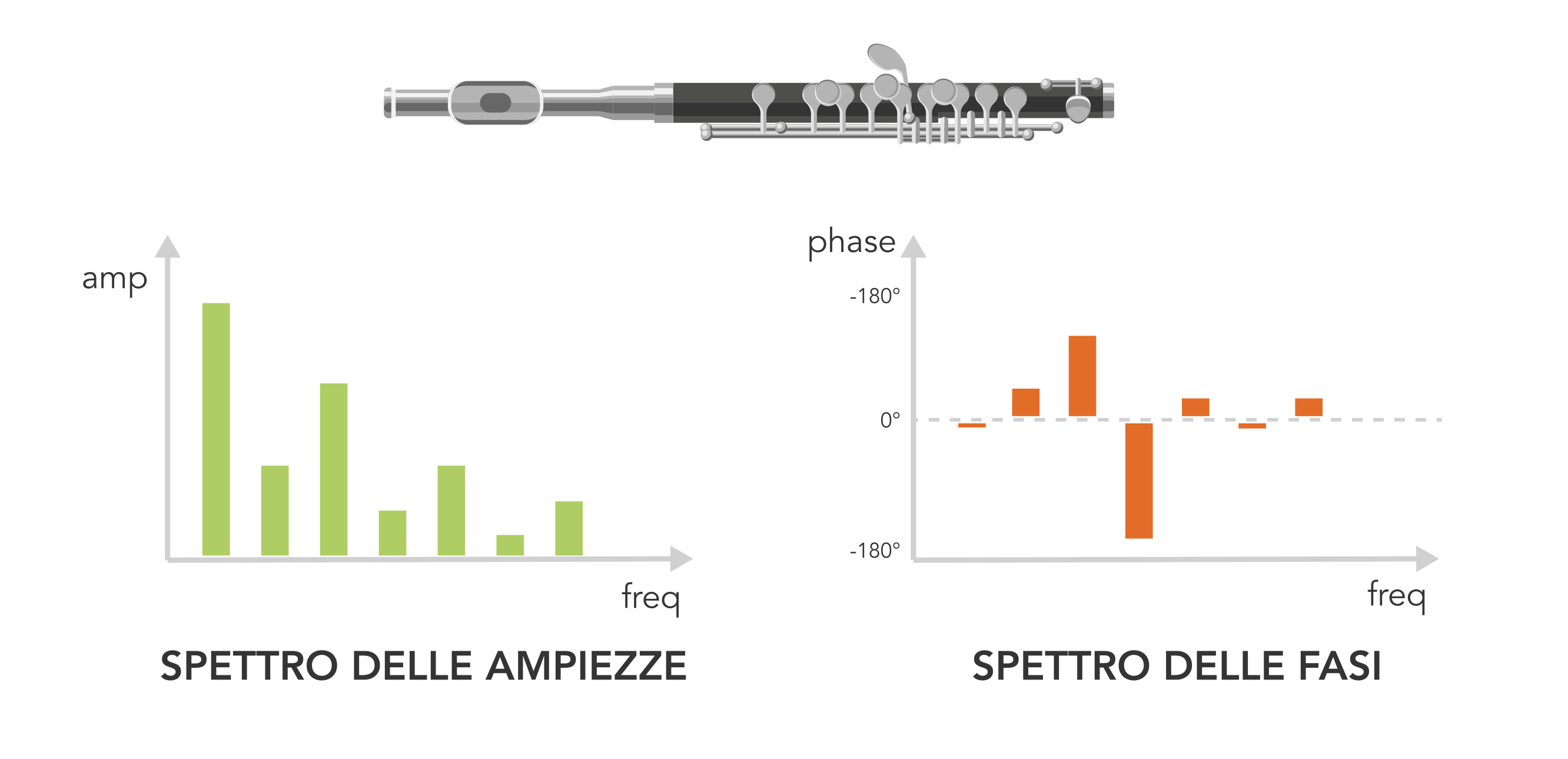
Fotografando un istante di suono, lo spettro è rappresentabile con uno spettro delle
ampiezze o, in alternativa, con un spettro delle fasi.By “photographing” an instant of sound, the spectrum can be represented with an amplitude
spectrum and with a phase spectrum
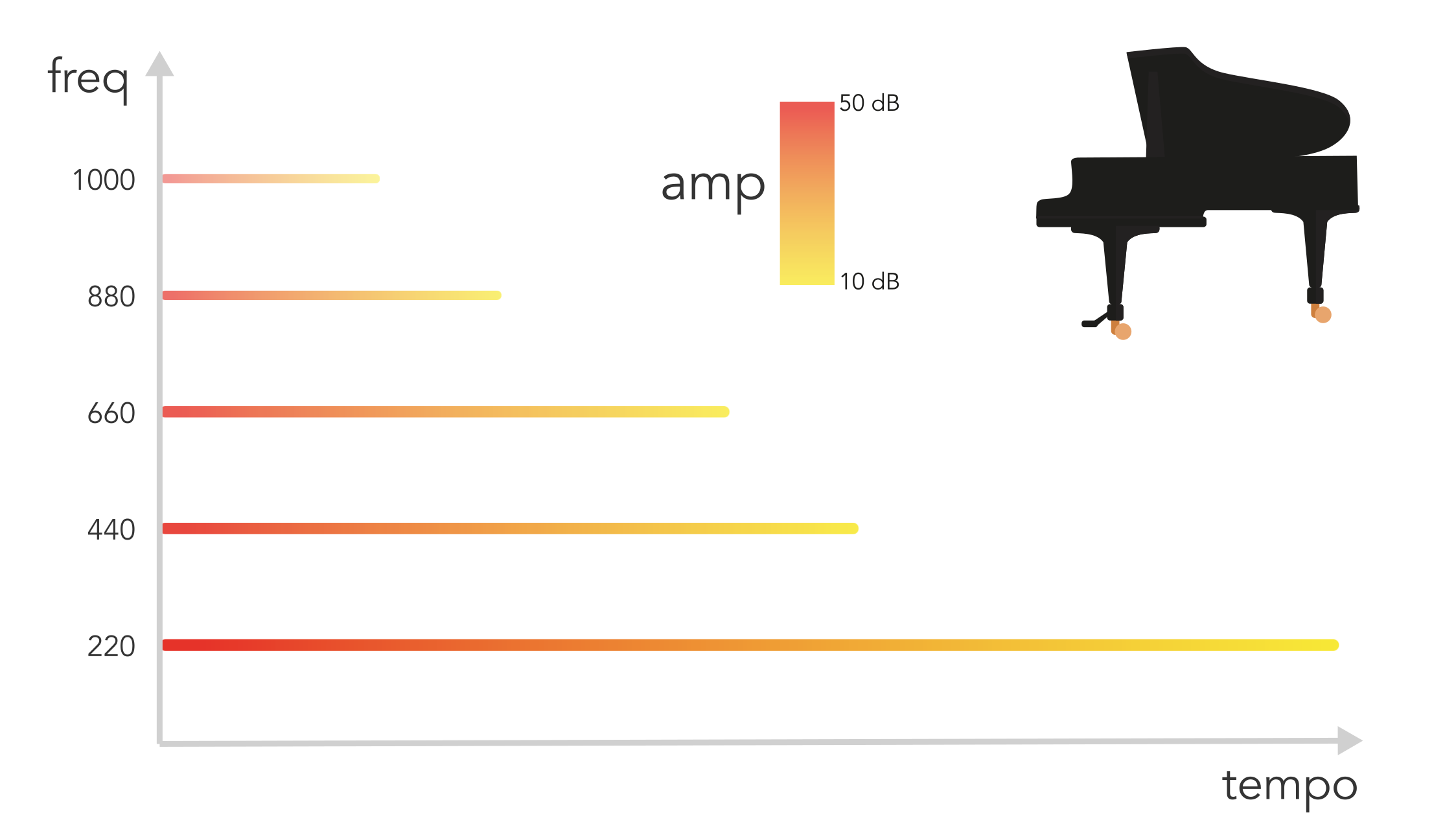
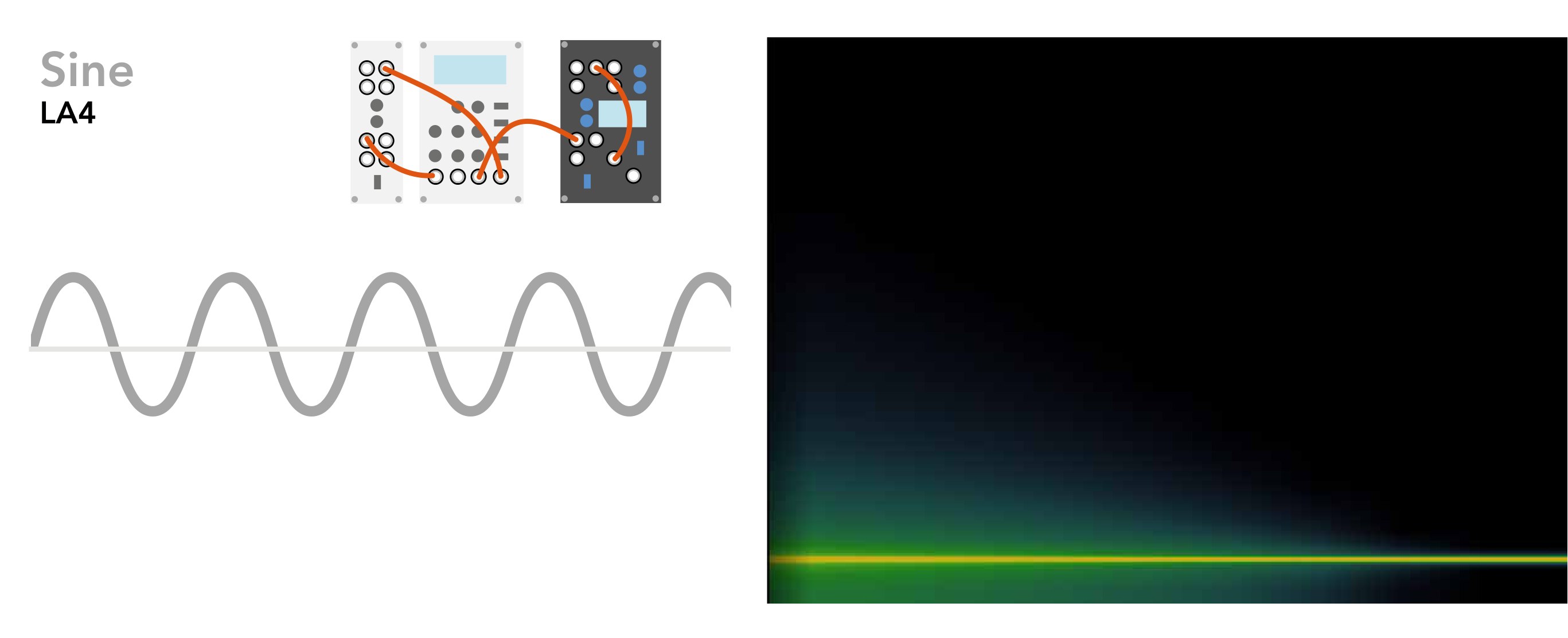
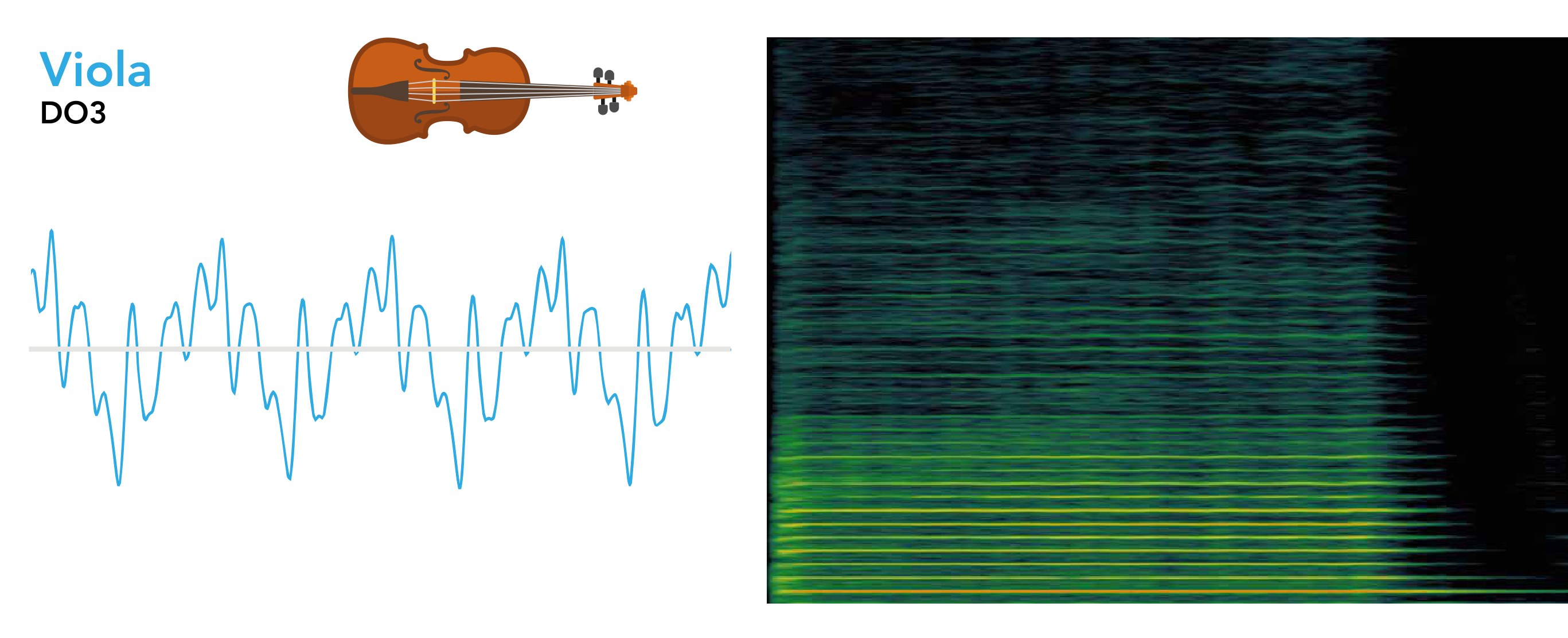
Lo Spettrogramma: lo spettro che cambia nel tempoThe Spectrogram: the spectrum as it changes over time
Le sinusoidi che compongono il suono si possono dividere in:
- Una Fondamentale (normalmente è la prima sinusoide partendo dal grave e la più ampia,
non sempre è identificabile)
- Una o più Parziali (tutte le altre)Sine waves in a timbre can be divided in two categories:
- A fundamental (normally the lowest frequency sine wave with the largest amplitude
- one or more Overtones (partials) to describe all sine waves above the
fundamental
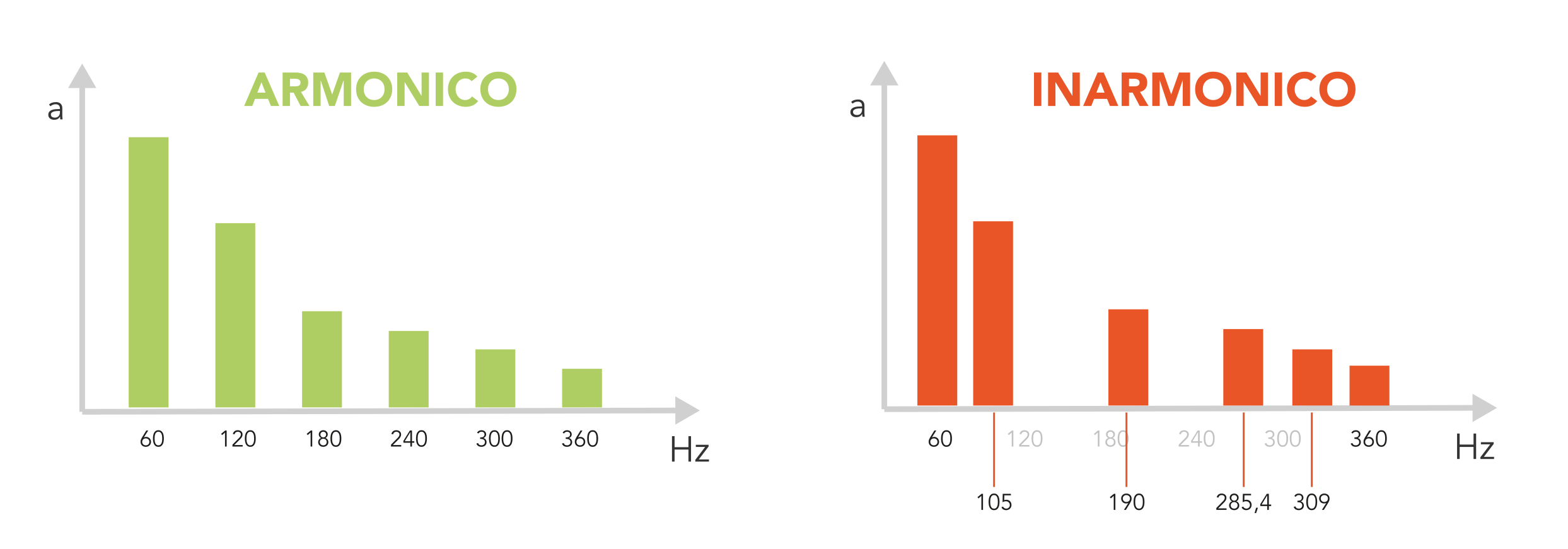
ArmonicoHarmonic
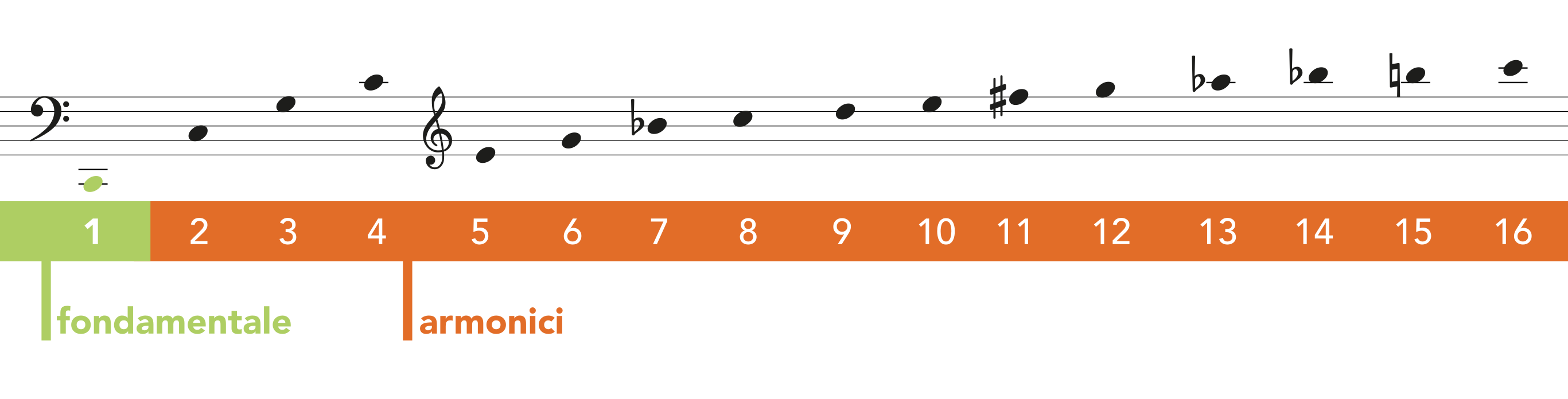
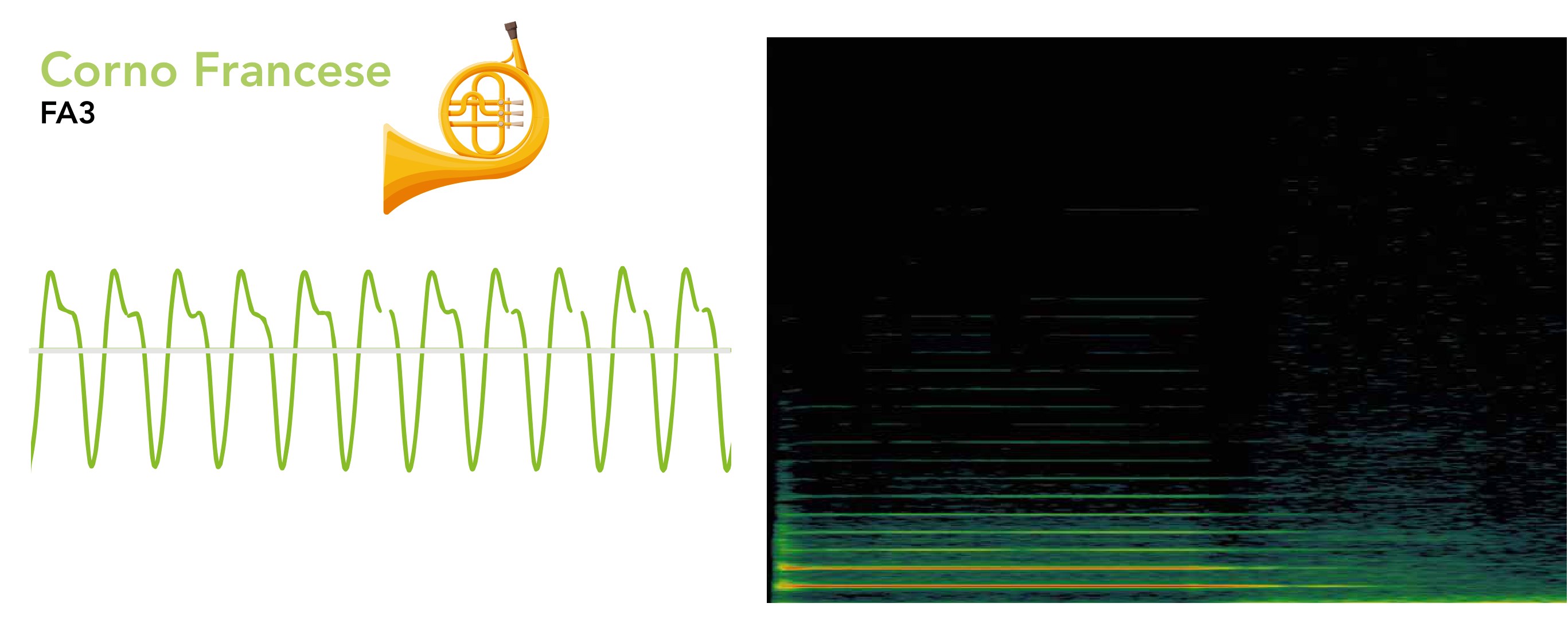
Le parziali sono multipli interi della fondamentale. Suono con altezza definita: flauto, violino, tromba…Partials are integer multiples of the fundamental. Sound with a defined pitch: flute, violin, trumpet…
InarmonicoInharmonic
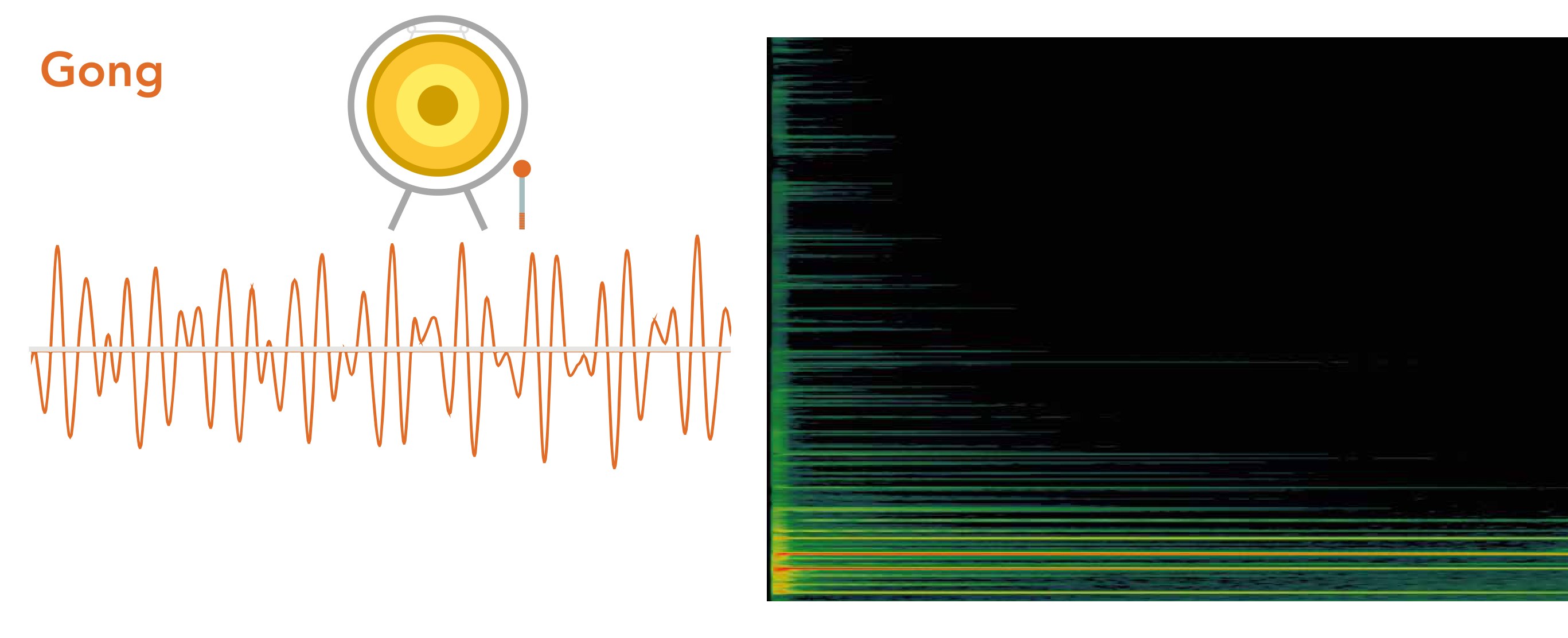
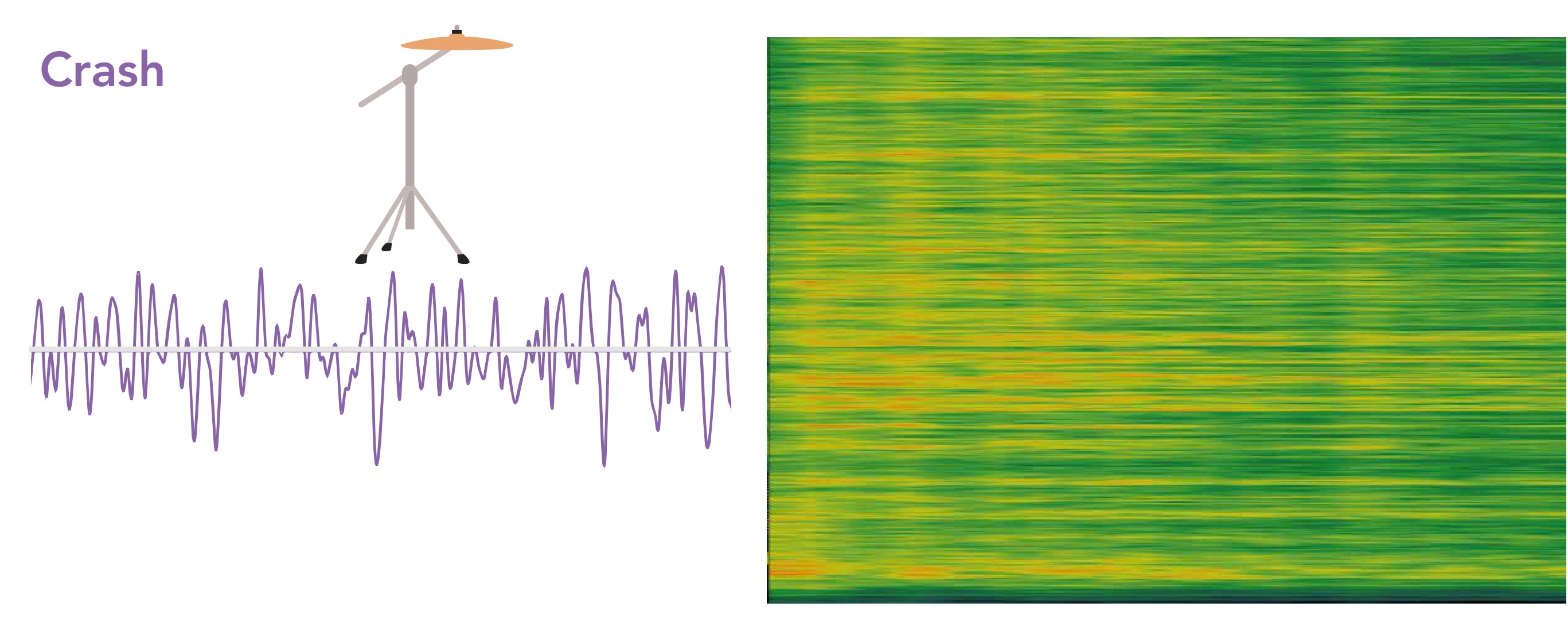
Le parziali non sono multipli interi. Suono senza altezza definita: campana, piatto, gong…Partials are not integer multiples. Sound without a defined pitch: bell, cymbal, gong…
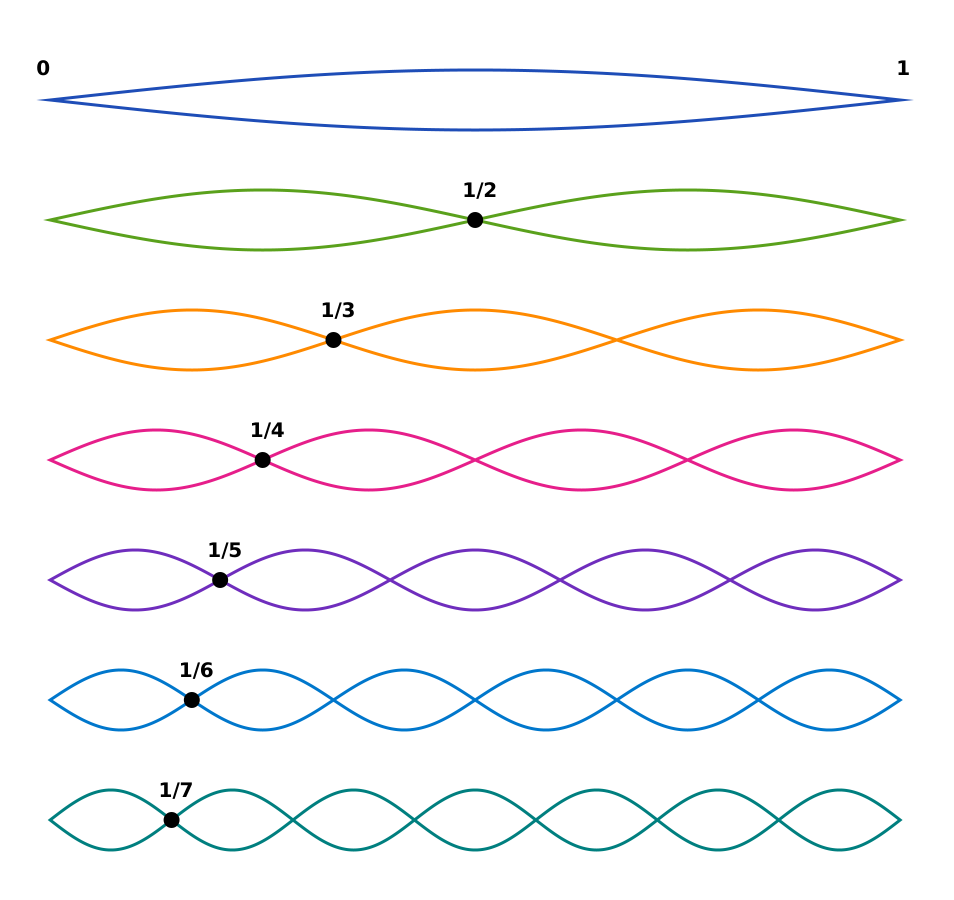
La fondamentale e i suoi armonici (½, ⅓, ¼, ⅕…) vibrano simultaneamente, ciascuno con una propria ampiezza.The fundamental and its harmonics (½, ⅓, ¼, ⅕…) vibrate simultaneously, each with its own amplitude.
Consideriamo il DO come fondamentale:If we consider C as fundamental
Armonici naturali e Intonazione EquabileNatural harmonics and Equal Temperament
Le frequenze degli armonici naturali non coincidono esattamente con le note della scala temperata. La differenza si misura in cent (1/100 di semitono).Natural harmonic frequencies do not exactly match the notes of the equal temperament scale. The difference is measured in cents (1/100 of a semitone).
rET = 12√2 ≈ 1.0594…
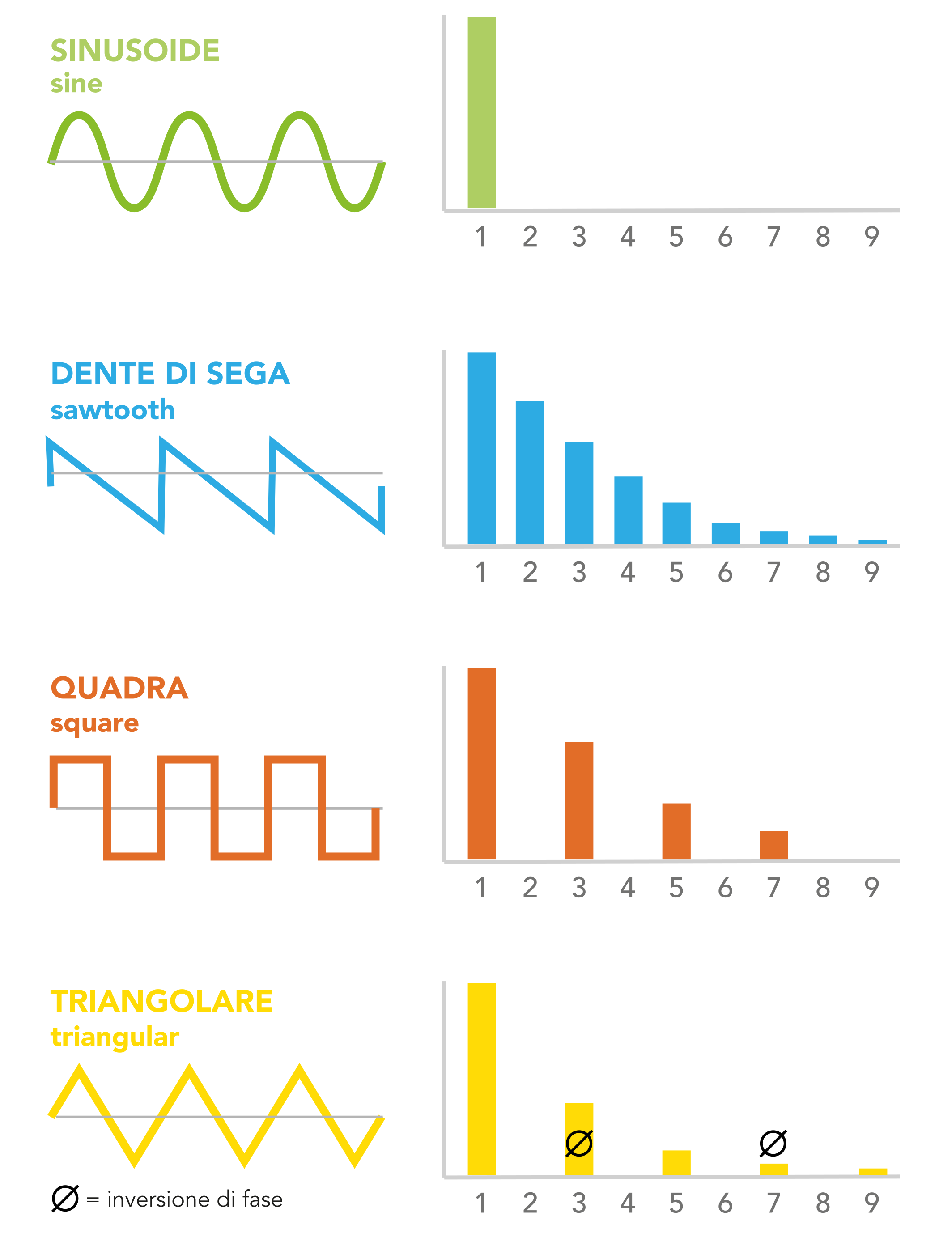
Gli Spettri delle forme d'onda classicheThe Spectra of classic waveforms
SinusoideSine Wave
ViolaViola
Corno FranceseFrench Horn
GongGong
Piatto CrashCrash Cymbal
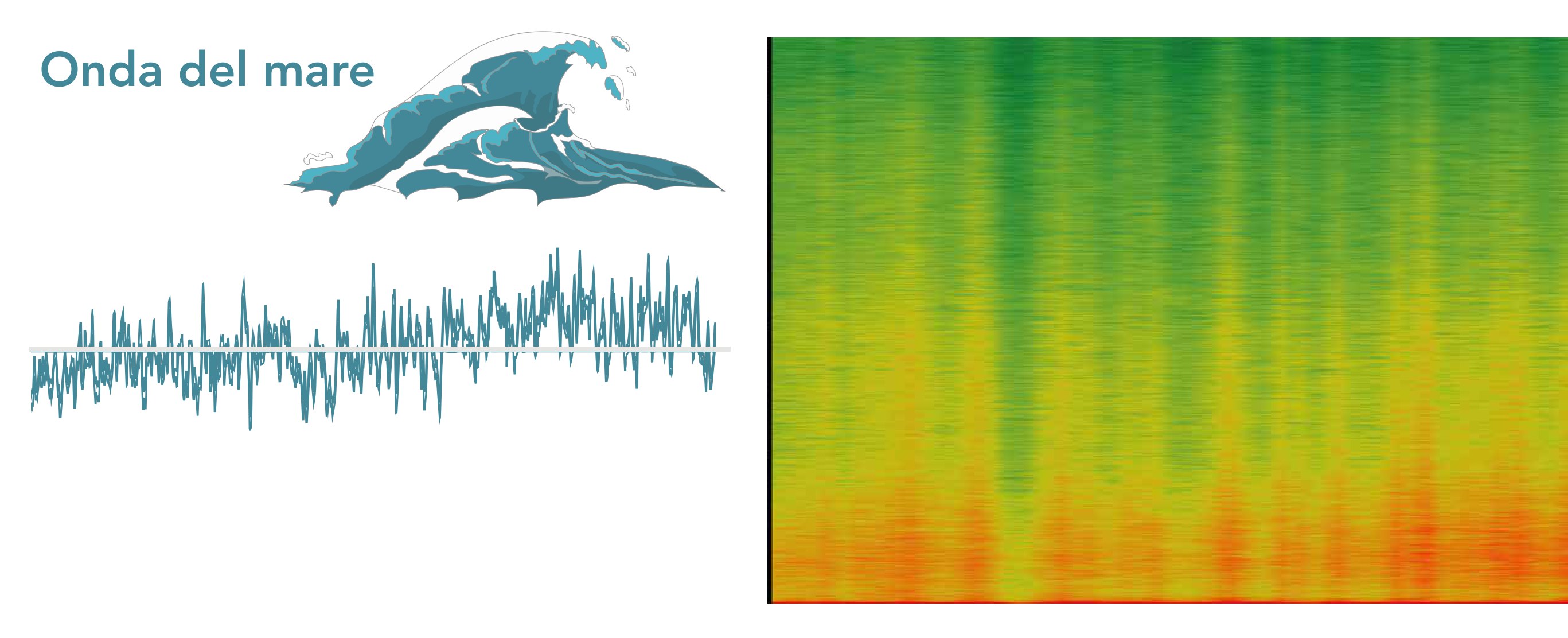
Onde del MareSea Waves
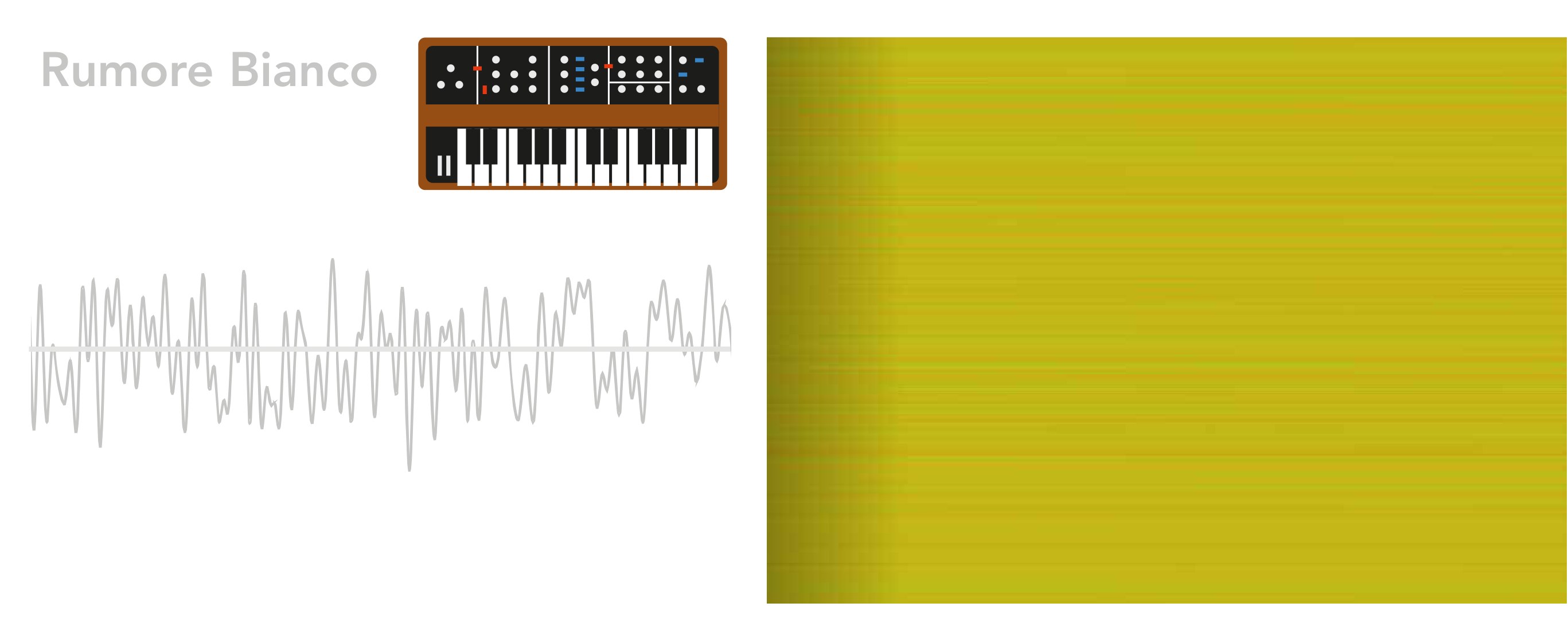
Rumore BiancoWhite Noise
Suono ElettronicoPlay With Sound
IL LIBRO È ORA DISPONIBILETHE BOOK IS NOW AVAILABLE